The ancient tribe of Pakistan... |
||
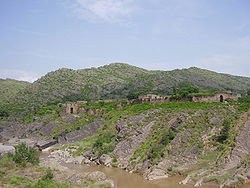 Pharwala Fort of Gakkhars... Gakkhar Clans Currently, there are forty one clans/branches of Gakhars but the following six are well-known and are the most important ones:
|
The Gakhars (also Gakkhar or Ghakhar or Ghakkar) (Urdu: گاکھر) were a fiercely independent and warlike clan now located in Rawalpindi, Islamabad, Jhelum, Kashmir, Gilgit, Baltistan, Chitral, Khanpur (NWFP) and Mirpur regions in modern day Pakistan. They formed a feudal aristocracy over the territories they controlled. A similar clan was recently portrayed in Asif Kapadia's critically acclaimed and BAFTA award winning 2001 film "The Warrior". The Encyclopædia Britannica Eleventh Edition (Vol. 15, p413) of 1911 states that "the Ghakkars seem to represent an early wave of conquest from the east, and they still inhabit the whole eastern slope of the district; while the Awans, who now cluster in the western plain, are apparently later invaders from the opposite quarter. The Gakhars were the dominant race at the period of the first Mahommedan incursions, and long continued to retain their independence. During the flourishing period of the Mogul dynasty, the Gakhar chieftains were prosperous and loyal vassals of the house of Babur; but after the collapse of the Delhi Empire Jhelum fell, like its neighbours, under the sway of the Sikhs. In 1765 Gujar Singh defeated the last independent Gakhar prince, and reduced the wild mountaineers to subjection. His son succeeded to his dominions, until 1810, when he fell before the irresistible power of Ranjit Singh." The 1893-94 Gazetteer of the Rawalpindi District also notes that "from the moment where oral traditions give way to more authentic historical records, the history of the Potohar becomes that of the Gakhar clan. The Gakhars became prominent at the time of the early Muslim era and have more or less maintained their rule over the city of Rawalpindi and parts of Hazara and Jhelum districts, independent of the sovereign powers at Delhi and Agra, until being defeated at the beginning of the nineteenth century by the Sikhs." Important early sources for the Gakhars are "Kaygawharnāma" by Rāyzāda Dunīchand Bālī, completed in 1725 (a copy is held in the British Library), Ferishta's The History of the Rise of the Mahomedan Power in India Till The Year A.D. 1612, Zahir-ud-din Mohammad Babur's, Baburnama and the Akbarnama of Abul Fazl. |
|
